 Follow us on Google News

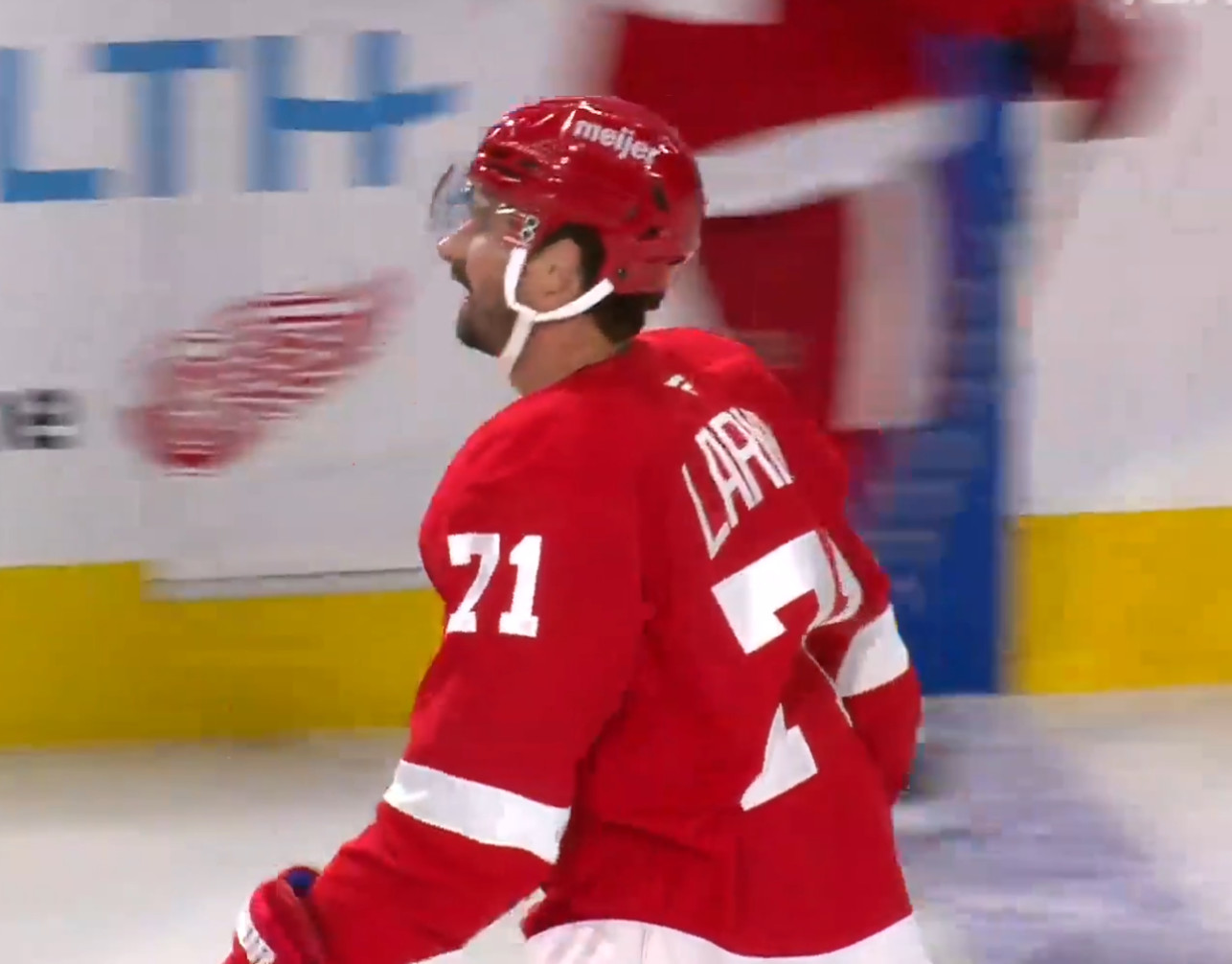
Just to be clear, this commentary follows up on the doubts already raised earlier this week regarding the acquisition of Dylan Larkin.
It has nothing to do with the fact that the Habs lost their last two games, in which Larkin was undoubtedly the Canadiens' best forward.
Larkin with the forecheck to start the play and gets his first point with Montreal! https://t.co/K5h8za7fvn
— Spittin' Chiclets (@spittinchiclets) November 24, 2026
Rather, it has to do with the overall context of his acquisition.
Last summer, I concluded that the Habs already had the solutions to their two biggest problems (second-line center and right-handed defenseman) in Hage and Reinbacher, and that they just needed to be patient and integrate them into the team at the right time.
Even if that meant waiting until spring in Hage's case.
After all, what's the rush when your team is still among the five youngest in the NHL?
When half of your core hasn't even reached full maturity yet?
When the oldest players on your core (Matheson, Suzuki, Dobson) aren't really… that old?
That you're just entering your prime for success?
Did the Habs' management think that if they didn't act now, it would soon be too late?
Were they afraid that the Habs' season would go to hell with all the injuries and niggles plaguing key players?
I think that even though, according to Hughes and Gorton, they've known for two months that Larkin would say yes to the idea of continuing his career in Montreal, that last fear carried some weight in the decision—perhaps enough weight to ultimately include Hage in the trade.
So it seems they've convinced themselves that 1) players like Larkin almost never hit the market, that 2) if you're able to get your hands on that kind of player, you do it, and that 3) if you think your season is in jeopardy, you might even go so far as to sacrifice your top prospect to get him.
Because it seems obvious that Hage hasn't been part of the deal for just two months.
A bird in the hand is worth two in the bush… or not!
“A bird in the hand is worth two in the bush,” read the headline in La Presse, penned by Alexandre Pratt following the trade.
But allow me to offer an analogy in the form of a question: just because steak is on sale this week, does that mean you have to buy it when you already have such a nice cut—and plenty of others that aren't too shabby—in the freezer?
Again, why spend all that money when you have all the time in the world to put the meat on the counter and let it thaw at room temperature before cooking it however you like?
It's not like you didn't have it—you did!
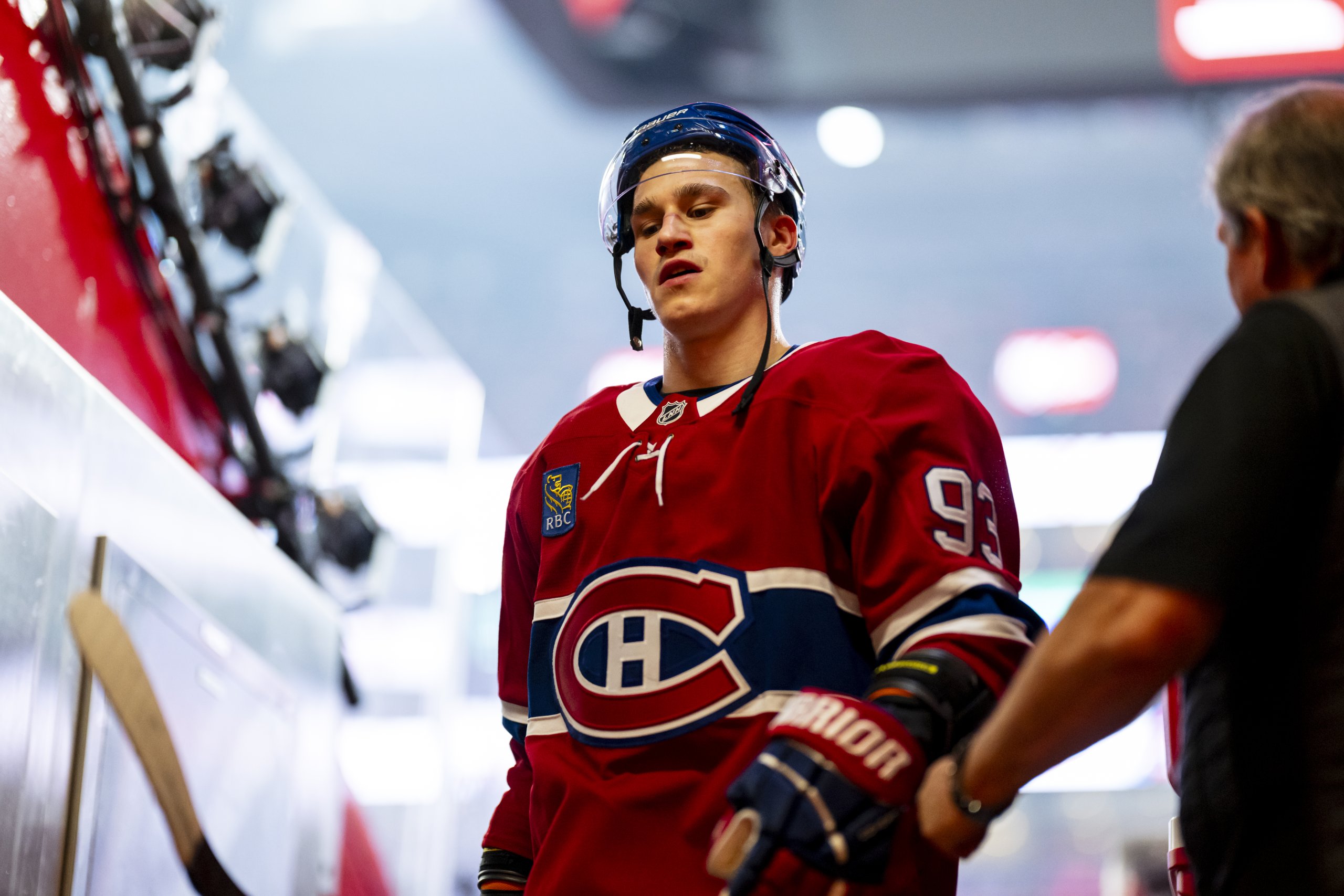
Basically, what was the rush to trade away 15 years of Michael Hage for 5 years—and probably not his best ones—of Dylan Larkin?
Suzuki isn't 32—he's just 27!
By the time he's 32 (when his next contract comes up), Hage could have been the one leading the offense.
In five years, Larkin will be gone or will likely no longer be able to be a dominant second-line center.
So, to me, this is more like “a bird in the hand is worth two you'll never have…”
Let's stop using the term “elite”
Dylan Larkin is a very good hockey player. I'd even call him a “star” player, no problem at all.
After all, isn't he one of only five players in the NHL to have scored at least 30 goals over the past five seasons?
But does that automatically make him an “elite” player, as we've heard and read time and again this week in the sports media?
No. No. And no again.
Classifying Larkin among the elite alongside players like Mackinnon, Barkov, Draisaitl, Kaprisov, J. Hughes, Kucherov, Matthews, etc., is either pure media hype, a lack of vocabulary, or an inability to rank athletes.
He's a talented, well-rounded, consistent, reliable, intelligent, hard-working player—a top-tier second-line center, to be sure.
But he's never had a season with more than 79 points and has never been nominated for the Selke or any other trophy.
The elite can rack up 20–30 more points without breaking a sweat, in addition to regularly changing the course of games in just two or three shifts.
Larkin simply isn't in that league.
And don't tell me again that he's never played with good players: Seider, Raymond, DeBrincat, and Kane aren't exactly slouches! They're stars just like him!
Larkin will remain a solid player through 2031. And yes, the Habs will get some pretty high second- and third-round picks.
But was it worth sacrificing the organization's top offensive prospect for him, on top of two first-round picks and Kirby Dach—himself a former first-round pick who's now in his prime and was doing a great job on the bottom six?
DACH'S FIRST POINT AS A RED WING🗣️ https://t.co/rgJ5eWBvuO
— Detroit Red Wings (@DetroitRedWings) November 26, 2026
1) The Habs had better make the playoffs!
2) Larkin had better be very good in the playoffs, where he's only played five games in his career!
This is a trade that could very well define Gorton and Hughes's tenure in Montreal.
Share this post