

/https%3A%2F%2Fcdn-tor.buminteractif.com%2F2026%2F10%2F7ccb2d56-702f-4fde-8c47-11e24367e29f.jpg)
Morality is one of those characteristics that is often mentioned when it comes to distinguishing humans from the other creatures that inhabit the Earth and its surroundings.
On Channel D, does the lioness feel guilty about killing the little antelope calf that's limping?
One might doubt it…
Same goes for the alligator, who wouldn't have much of a guilty conscience about a human arm dangling a little too far out of a rowboat…
Well, some might say that a certain president doesn't seem to feel much guilt over the murders committed against other humans by ICE agents.
But then again… if he were morally “normal” and not too ideologically driven, he would be!
Basically, morality comes down to asking yourself whether you're doing the right thing, whether you feel you're doing the right thing, whether you'd want everyone else to do what you're about to do, whether your action would be desirable to the majority, and so on.
But perhaps it's the Scottish philosopher David Hume and his—rather flexible—ethics of sentiments that will be most useful to us in analyzing our current topic in the realm of sports ethics: Should the Canadiens acquire Larkin in exchange for… Michael Hage?
What could possibly be moral or immoral about a hockey trade, you might ask?
Isn't it just a simple transaction, like thousands of others?
A young player for an older one, a prospect in exchange for a veteran who can help right away… We've seen this before, haven't we?
Of course, this isn't a matter of life and death, nor is it a true case of high political treason.
But at Hume, when it comes to everyday morality, we look first to the character and virtues of the people involved. And the media always give us a glimpse or two into the character of the people making headlines…
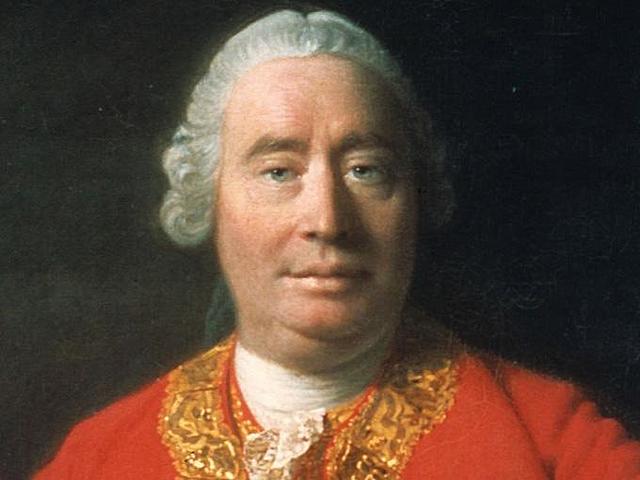
(Credit: https://www.britannica.com/event/Scottish-Enlightenment)
However, on this subject, given everything that has come out of Detroit over the past two years, many harbor doubts about Larkin's character—the kind of person he is, the kind of values he seems to uphold.
Is he a good point guard?
Is he mentally tough enough?
Is he the type to blame others rather than take responsibility?
Why didn't he want to try to turn things around with his teammates in Detroit?
Why wouldn't he want to play in Canada or in a “high-pressure” market like Montreal?
Many questions, few answers… for now.
As for Hage, Habs fans in Quebec are generally sympathetic to his cause. His father, who tragically passed away a year before he was drafted, was a huge Canadiens fan. Michael, who speaks very good French, has repeatedly said he wants to play for the Canadiens. And on the hockey side, his progress is very real at every level.
Finally, many would have loved to see him don the Habs' jersey this fall, as he likely has little left to learn in the NCAA.
But even if we might still question some of the reasons that led him to stay at Michigan for a third year, many saw it as a sign of Hage's maturity. Once again, a sign of good character…
Hage seems like a humble and intelligent guy, a really nice guy, a really good person.
So the character of the Habs' management would also be put to the test in the event of a Hage-for-Larkin trade.
Would Gorton and Hughes be viewed negatively as heartless for trading Hage for a player whose desire to play in Montreal remains to be seen? Do they owe it to Hage to at least give him the opportunity to play a few games with the Canadiens?
From a slightly less personal perspective, would they simply be seen as poor managers—panicked and lacking vision—for parting ways with a very promising young prospect, eager to play here, in exchange for a 30-year-old player who is still very good, to be sure, but who can only decline in the coming years? And if Hage were to become better than Larkin within two years, one might wonder…
Or would the Canadiens' front office be seen instead as good, rigorous, aggressive, and sharp administrators—capable of setting their emotions aside—who see a window of opportunity opening as early as this season and who were just waiting for this kind of opportunity to play their cards?
According to Hume, the two emotions that would guide our moral judgment would be, on the one hand, admiration, and on the other, something resembling disgust.
Thus, our judgment regarding right and wrong, good and bad, would first come through a kind of gut feeling we experience in the face of a morally charged situation, giving us clues about the character of the people involved.
So here's the question: Would you admire Hughes and Gorton if they acquired Larkin in exchange for Hage? By extension, will you be cheering and applauding Larkin tonight at the Bell Centre?
Or would you be somewhat put off by such a trade?
Or, as a third option, would such a trade be “strictly business” to you?
As for me, Larkin would still be a borderline case in exchange for Hage, both from a hockey standpoint and a moral one…
Despite the immediate sporting appeal, doubts would still linger in my mind.
